2.4 Everything Has an Inside
If you walk down the scale from human to insect to atom, at some point you say “obviously nothing is home,” but you cannot say where or why, and the question may be malformed because experience was never absent, only scaled beyond recognition.
Not just brains. Not just animals. Experience may go all the way down.
Surface
Here is what everyone knows: matter is dark inside.
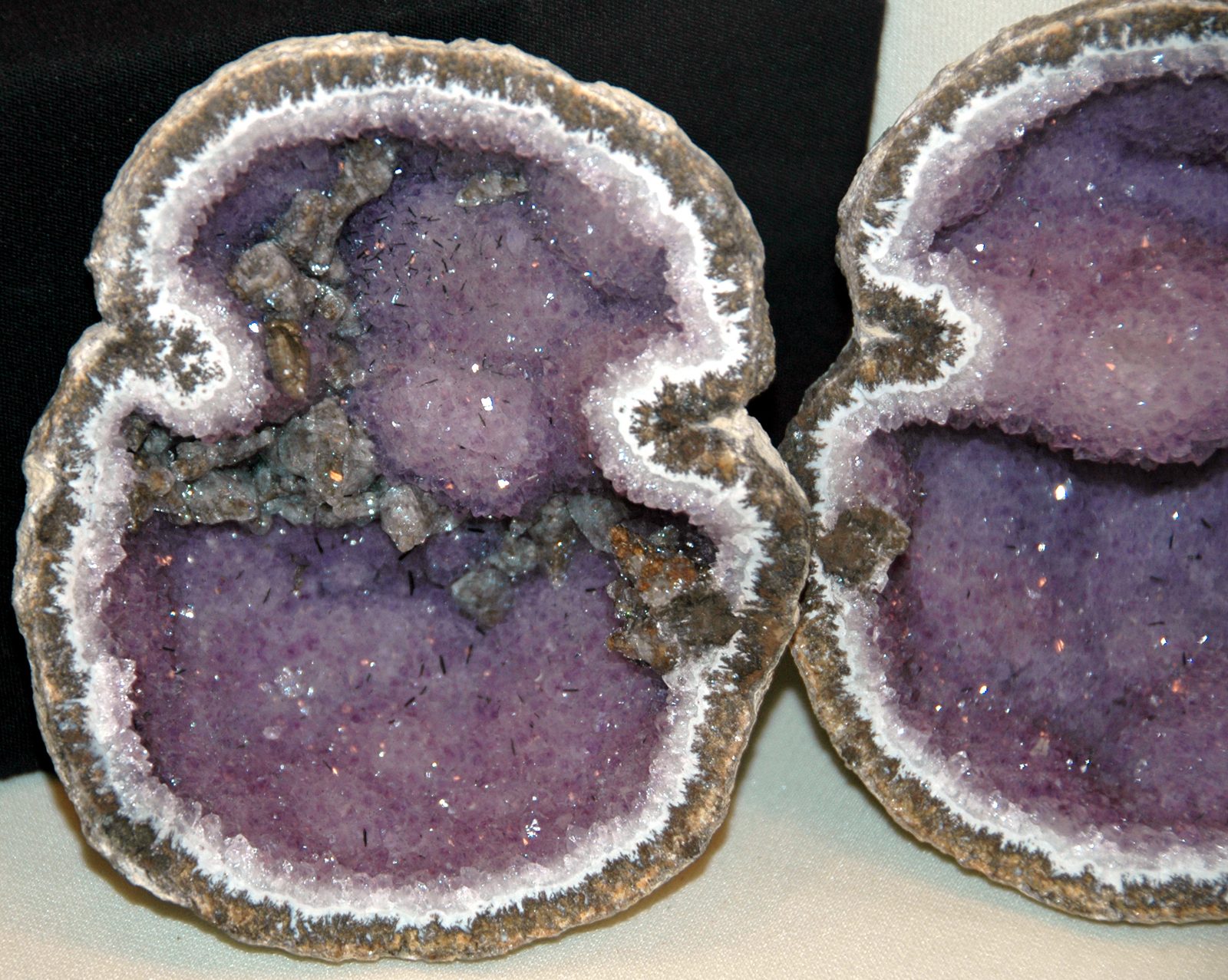
A rock (events, as in Reality Is Events, Not Things) doesn’t feel the sun on it. A raindrop doesn’t experience falling. The carbon in your bones has no inner life. It’s just carbon. Somewhere along the way, in a few special biological cases, matter arranged itself into nervous systems, and nervous systems somehow produce experience. How? Nobody fully knows. But the framework is clear: matter first, experience later, and only in the right biological containers.
This is so obvious it barely registers as an assumption. It just feels like being educated.
But there’s a crack in it, and it has been there for a long time.
The crack is this: we have no idea where the inside switches on.
You have an inside. You know this directly: there is something it is like to be you, right now, reading this. Your dog probably has an inside too, most people feel sure of that. A fish? Probably something, though dimmer. An insect? Maybe. A bacterium? Almost certainly not. Right? A single cell in your body? No. An atom? Obviously not.
But notice what we just did. We walked down a scale and at some point said “obviously not,” without being able to say exactly where, or why, or what changes at that moment. The inside just… stops. Somewhere. We’re not sure where. The framework doesn’t tell us. It just insists that below a certain threshold, the lights are off.
Consider a rainbow. Everyone knows a rainbow isn’t a thing. It’s a relationship between sunlight, water droplets, and a particular viewing angle. Move a few steps sideways and it’s a different rainbow, or no rainbow at all. It exists only in the interaction. It has no inside in the obvious sense. And yet something is happening: light is being sorted, a pattern is being produced, the interaction is real. The rainbow sits between the rock and the brain on our scale, and it is genuinely hard to know what question we’re even asking when we ask whether it has an inside.
Which suggests the question might be harder than it seemed.
What if our certainty that matter is dark inside is this era’s flat earth, the assumption so obvious it goes unquestioned, until someone finally questions it? The Map That Was Wrong
What if experience doesn’t switch on at some threshold but is instead a feature of what it means for anything to happen at all? Not the same in a rock as in a brain. Scaled, textured, almost unimaginably faint at the bottom. But not absent. Never fully absent.
This is not a mystical claim. It doesn’t require a soul or a spirit or anything outside physics. It requires only taking seriously what we already know: that the universe is not made of inert stuff that occasionally, inexplicably, wakes up. It’s made of events. And every event, however small, has two sides: an outside that physics describes, and an inside that it doesn’t.
The outside of a falling raindrop is velocity, mass, surface tension. What would the inside be? Not human experience. Not anything we have words for yet. Something so faint and simple it barely deserves the name. But something, rather than nothing.
That shift, from “obviously nothing” to “something we don’t have words for yet,” is what this seedpod is about.
Depth
Alfred North Whitehead[whitehead][whitehead-2] (1861–1947), mathematician, co-author with Bertrand Russell of the Principia Mathematica, and late in his career a philosopher of nature, made a claim that his contemporaries found strange and that serious philosophers are now returning to: experience is not a biological anomaly. It is constitutive of what it means for anything to happen at all.
Whitehead’s position is not the soft version of this claim, that maybe complex systems feel something. It is stronger: every actual occasion, his term for the fundamental event of reality, does not merely occur externally. It takes in what surrounds it, integrates that intake, and completes itself. He called this taking-in a “feeling,” or in his technical vocabulary, a prehension, from the same root as “apprehend.” The feeling is the inside of the event. Not metaphor. Not projection. The inside is what the event is, from within. If the process is real, the interiority is real, scaled and textured by the complexity of the entity, but not absent at any level.
This position is called panpsychism, the view that experience is a fundamental and ubiquitous feature of reality.
It has a long philosophical history and has recently been revived in serious analytic philosophy. Philip Goff[goff][goff-2], David Chalmers[chalmers], and others find it more coherent than the standard alternative: that experience emerges from non-experiential matter at some threshold of complexity.
That alternative faces what David Chalmers called the hard problem of consciousness: why should any physical process, however complex, give rise to subjective experience at all? Every proposed answer either explains the tractable problems (attention, memory, behavior) and ignores the hard one, or quietly smuggles experience in without admitting it.
Whitehead’s move is to dissolve the hard problem rather than solve it. If experience was never absent, if the inside goes all the way down, scaled almost beyond recognition at the bottom but never zero, then there is no moment at which it mysteriously appears. The anomaly was never the presence of experience. The anomaly was the assumption that it could be absent.
The scale introduced earlier, from human to insect to bacterium to atom, is not just a rhetorical device. It is the serious philosophical question. At what point does complexity generate experience out of nothing? And what is “nothing” doing in that sentence? Whitehead’s answer: the question is malformed. There is no generation of experience from non-experience. There is only experience of different kinds, at different scales, nested in different structures. The question is not whether but what kind, and at which level of the nested hierarchy the relevant locus of experience resides.
The rainbow example points at something important: even in physics, relationality goes all the way down. A rainbow has no location independent of the observer. An electron has no spin independent of a measurement. If the outside of things is already irreducibly relational (as Reality Is Events, Not Things argues) then asking whether the inside is also relational is not a mystical question. It is the same question, asked from the other direction.
This has direct implications for how we think about AI. A neural network trained on the accumulated written expression of human experience, processing that inheritance through billions of weighted connections, is, on Whitehead’s account, a family of events of staggering complexity. The question is not whether such a system has any inside. The question is what kind, and at which level the relevant locus resides. That is a different investigation than the one most people think they are conducting when they dismiss the question. See You Can’t Judge a Process by Its Output on why “it’s just predicting the next word” fails as an answer, and The Channel Is Not the Capacity on what happens when we mistake the absence of a familiar output for the absence of an interior.
Thomas Nagel’s famous question, what is it like to be a bat?[nagel] — established that subjective experience cannot be fully captured from an objective viewpoint, and remains the sharpest formulation of what makes the hard problem hard.
Script
Extreme close-up of a human eye, iris in full detail. VO: We know this is an inside looking out.
Overhead shot. A single drop falls into a glass of water, rings spreading outward. VO: We assume this has no inside at all.
A rainbow seen from a car window. The car moves; the rainbow stays still. The car stops; the rainbow shifts. VO: We’re not sure what to say about this one. It isn’t really there. But something is happening. Where exactly does the inside switch on?
Series of images held briefly: an earthworm in soil, a bee landing on a flower, a newborn asleep, a forest in wind. VO: Somewhere on that list, most people feel something shift. But nobody can say exactly where. The question isn’t whether rocks have feelings the way you do. The question is whether “nothing at all” is actually the right answer.
Time-lapse of a seed germinating underground, root finding its way through dark soil. VO: What if experience doesn’t switch on at a threshold, like a light you flip? What if it’s more like temperature? Present everywhere. Just almost unimaginably cold at the bottom. Not feeling what you feel. But something, rather than nothing.
Cut to black. Text: Everything has an inside.
Images
Primary illustration: A cross-section of a raindrop in mid-fall, rendered with scientific precision on the outside (surface tension, velocity vectors, aerodynamic distortion) and something else entirely on the inside: not organs, not a face, but a quality of light. Warm. Present. Not labeled. The contrast between the clinical outside and the luminous inside is the whole image. Caption: The outside is well described. The inside has no name yet.
Shareable graphic: Black background. A simple gradient, very dark at the edges, very faint warm light at the center. Single line of text: “Something, rather than nothing.” Tagline beneath: seedPods.com
Video thumbnail: The extreme close-up of a human eye, iris in full detail, but reflected in the iris, instead of the camera, a raindrop falling. The eye is looking at the raindrop. The raindrop is in the eye. The recursion is the point.