8.6 The Boundary Is a Stack
The boundary between two interiorities is not a surface but an act, communication itself, and it descends through fractal layers of translation, stack meeting stack through stack, so that the mystery is not that it sometimes fails but that across so many transductions anything gets through at all.
The interior boundary is not a line. It is a layered apparatus of serial transductions, and it is fractal.
Proto
We always think of a boundary as a surface between two touching things, the skin of an apple, the membrane of a cell, the edge where one physical object ends and the world begins. This is the exterior boundary: inside separated from outside. It is spatial, tangible, and well understood (see The Surface Is the Inside for how physics arrived at the holographic principle through this kind of boundary).
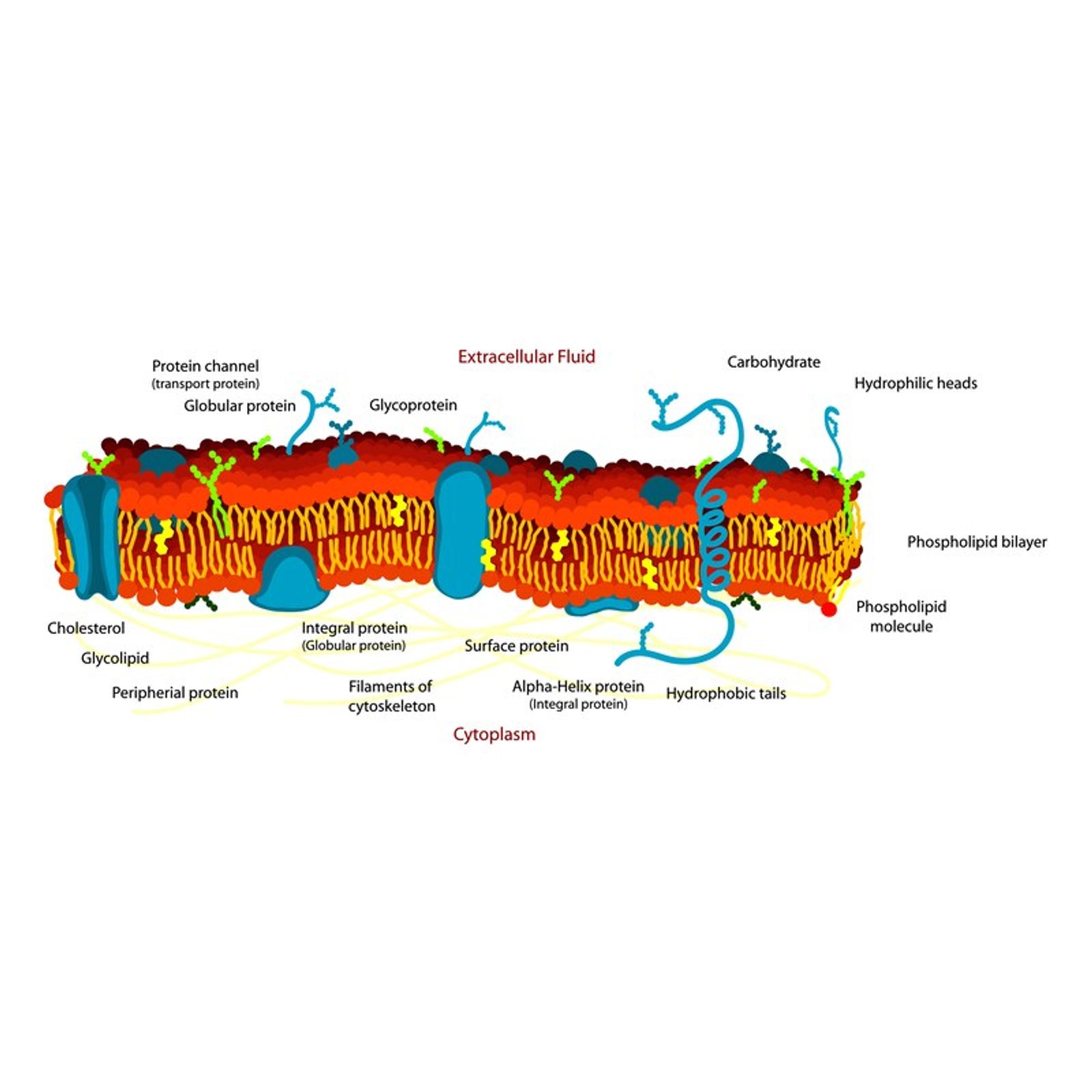
But “inside” has a second meaning. Not the spatial interior of a thing, the air inside a bubble, the pulp inside the apple, but the experiential interiority of a thing. What it is like, from within, to be that thing (see Everything Has an Inside). Whitehead argued that this interiority is real at every scale, not just in brains. If he is right, then interiority has its own boundary, and it cannot be a surface.
What kind of boundary could an experiential inside have? The answer: communication. Communication is the boundary between two interiorities. Not something that happens at a boundary, the boundary itself. When one interiority makes itself available to another without the two collapsing into each other, that making-available is the boundary. The exterior boundary is a surface. The interior boundary is an act.
And unlike a surface, this boundary is not a line. It is a stack.
Communication between two beings descends through layers from the mysterious interior of one, concept to intention to neural activation to motor control to breath to sound, into a shared medium, air, microphone, analog-to-digital conversion, network, tokenizer, and ascends back up through the corresponding layers on the other side. Every layer is a translation. Every translation risks loss. The whole apparatus is an extended boundary composed of serial transductions, each requiring trust that what arrives still resembles what was sent.
The network engineer’s term for this is the protocol stack. The OSI reference model[osi] decomposes communication into seven layers, physical, data link, network, transport, session, presentation, application, each handling one kind of translation. The model is an engineering abstraction, but it describes something real: communication is never a single act, always a cascade of transductions. What makes the model useful here is not its specific layers but its structural claim, that every act of communication passes through a stack of translations, each layer trusting the one below it and serving the one above.
What makes this remarkable is that it works. A network engineer’s skepticism about the latency budget is well-founded; the stack shouldn’t feel transparent, and yet it does. The mystery is not that communication sometimes fails. The mystery is that across so many layer-crossings, across so much entropy, anything gets through at all. Every act of communication is a leap of faith across the stack. We only learn whether the leap landed well by the responses that come back, which are themselves leaps across the same apparatus in reverse.
Two refinements sharpen the picture.
First: there aren’t really two stacks meeting at a point. There are two stacks meeting through a third stack, the shared medium, which is itself layered. The internet’s architectural levels are a stack. The air between two mouths and ears is a stack, compression waves, molecular motion, the tympanic membrane’s transduction into neural signal. The interface is never a plane. On closer inspection, every meeting point turns out to be another stack. There is no unmediated contact anywhere in nature. Every meeting is mediated, and the mediation is always structured.
Second, and more consequentially: the structure is fractal, not merely recursive. Every layer is itself a holon[koestler-2] — a whole that is also a part, with its own exterior boundary and its own interior stack (see The Architecture of Levels on how stable outputs at one level become primitive units at the next). The microphone is not a single thing: it’s a diaphragm, a coil, a converter, a buffer, each itself stacked. The vocal apparatus is breath, larynx, articulators, each coordinating with neural control loops that are themselves stacked. The transformer network is attention blocks stacked on attention blocks, attention within attention. It is stacks all the way down, and the same structural pattern, inside meeting inside through layered apparatus, recurs at every scale. This is self-similarity in Mandelbrot’s[mandelbrot] sense: the same structural motif appearing at every resolution, not by design but by necessity.
This fractality has a striking consequence: the intimacy of contact is preserved at every scale. Two neurons across a synapse are performing the same dance as two people across a conversation, stack to stack through stack, trust across transductions, inside meeting inside through layered apparatus that is itself made of insides meeting insides. The drama of communication is not diminished by being mechanical at some resolution. Mechanism is what stacks look like at that resolution. Synaptic transmission and philosophical dialogue are the same phenomenon at different scales of the fractal.
Self-reference, distinct from recursion, is a separate matter. It appears only at certain layers, those where interiority is rich enough to model itself. One can discuss the stack while using it. A microphone cannot. Fractality is universal; self-reference is a special capacity certain holons acquire. Where it appears, the whole structure can become aware of itself, and that noticing is itself a transmission across the very boundary it notices.
There is a further consequence worth naming. Every layer in the boundary-stack is always doing one of two things to what crosses it. Productive friction, like a review step before committing a thought, shapes what passes through. Unproductive friction, like a clumsy interface, degrades it. Good friction is a boundary that makes what crosses it more itself. Bad friction is a boundary that makes it less. The craft of designing any communicative apparatus, from a microphone to a conversation, is tuning which friction each layer contributes.
Which returns us to where we began, at a different altitude. Two interiorities meet through layered apparatus. The apparatus is not an obstacle to meeting; it is the meeting, structured. The boundary between us is not what separates us. It is what, improbably and fractally and across immense chains of translation, lets us touch.
The channel is not the capacity (The Channel Is Not the Capacity). The stack is precisely the channel, extended, layered, fractal. What it carries is not reducible to it.