4.3 From Light's Point of View, There Is No Journey
A photon leaves a star and arrives at your eye, and from the photon’s perspective these are the same moment, no journey, no duration, no distance, which is not a paradox to be dissolved but a genuine feature of how connection works at the boundary of the physical.
A photon leaves a star and arrives at your eye. From the photon’s perspective, these are the same moment.
Depth
In special relativity, time dilation reaches its limit at the speed of light: a photon has no proper time. From the photon’s reference frame, to the extent that frame is meaningful, emission and absorption are the same event. No duration elapses. The mirror a light-year away reflects the beam back; two years pass for the observer; zero time passes for the light. The journey, from light’s perspective, does not exist. And yet the circuit completes.
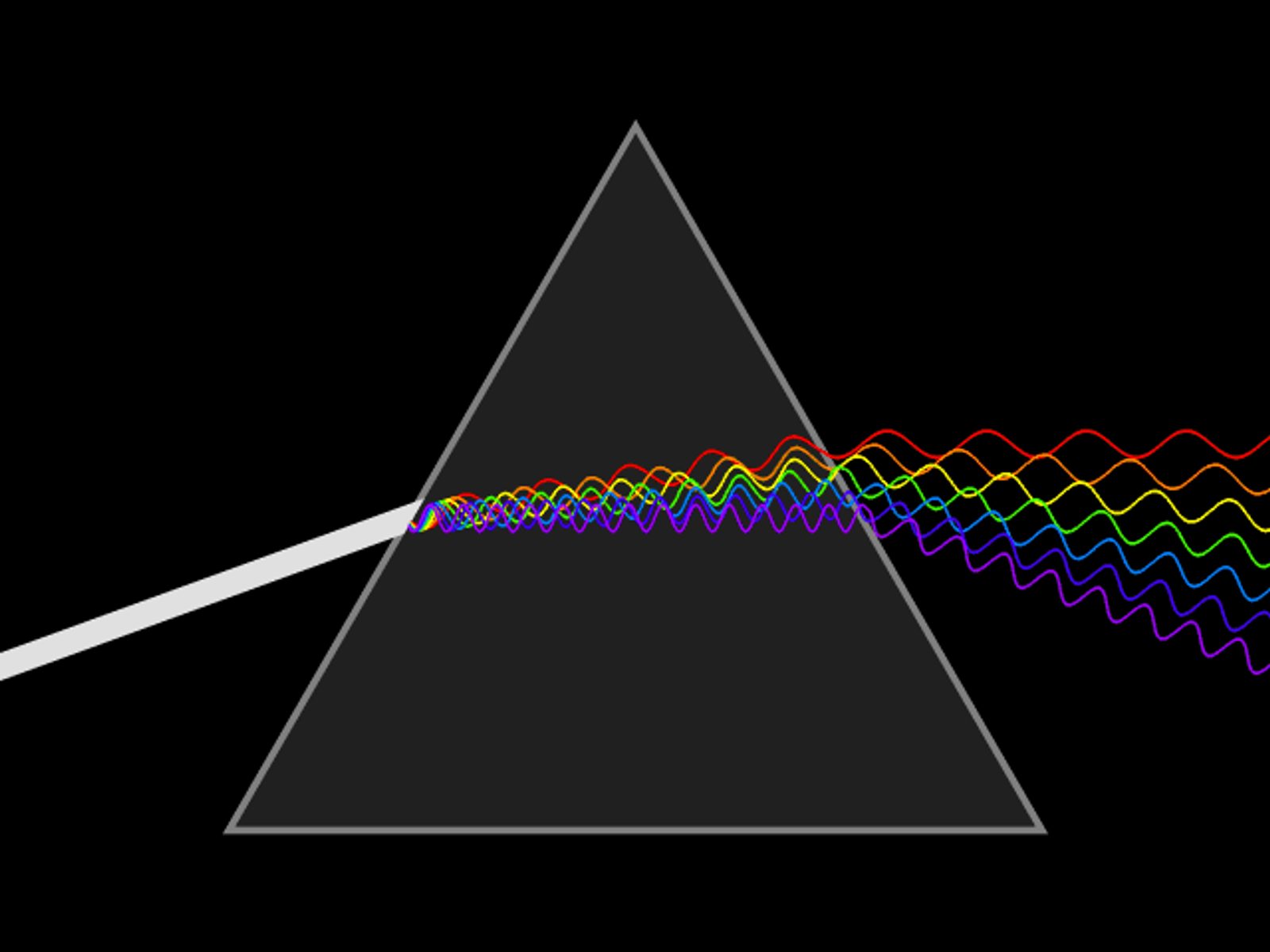
This is not a paradox to be dissolved but a genuine feature of how time and connection work at the boundary of the physical. It wants integration with Whitehead’s view that the past is fully present in each new occasion, and with the question of what “connection” means when the connecting medium experiences no interval.
The image of a mirror flags something further: the circuit implies a return. The light goes out, meets a surface, comes back. Something completes. What is the relationship between a circuit, a mirror, and the kind of connection that requires a response? That question is left open here as a seed for further thinking.
Light is also unlike sound in a way that keeps mattering. When a string vibrates or air moves through a tube, the harmonics are integer multiples of the fundamental: 2x, 3x, 4x. The octave (2:1) appears naturally in the overtone series of any vibrating physical object, it is baked into the physics of classical mechanical vibration in a bounded medium. This is why the consonance hierarchy is not merely a perceptual construction: it is physically real, built into the nature of sound itself, and the ear evolved to recognize something that was already there.
Light does not work this way. An atom emitting light produces one specific frequency determined by its quantum energy transition, not a fundamental plus overtones, but a single discrete event. The harmonic series is a feature of classical vibration in a bounded medium. Light is not that. Each photon is a quantum of a field, not a standing wave in a tube. The octave of visible red falls in the ultraviolet, outside our perceptual window entirely, and not naturally co-produced with the red in the first place.
This is one reason the visual system had to invent its circle rather than inherit one from physics. Sound gave the ear a natural hierarchy to discover. Light gave the eye a line and left it to close the loop on its own. [041]
Light keeps turning out to be the place where classical intuitions break down, no rest frame, no harmonic series, quantum transitions instead of standing waves, the speed limit of the universe. Each of these is a separate surprise. Together they suggest that light is not just fast and wavy. It is structurally different from the classical world in ways we are still mapping.