10.5 The Universe's Intention
The universe demonstrably gives rise to systems with intrinsic intention, which means intention is not outside physics but a recurring feature of sufficiently complex self-maintaining systems, and the question is whether the universe that keeps producing structures that care might itself be the kind of system whose dynamics favor what we call caring.
Intention is not imposed on the universe from outside; it is a natural outcome of the kinds of systems the universe produces.
Depth
The universe demonstrably gives rise to systems with intrinsic intention, human beings being the most familiar example. This establishes something important: intention is not outside physics, but a phenomenon that emerges within it.
Terrence Deacon’s Incomplete Nature offers the most rigorous contemporary account of how this happens: constraints propagate through thermodynamic and semiotic levels until “aboutness”, genuine reference to something absent, becomes possible. [deacon]
Across multiple domains, quantum systems, biological evolution, neural networks, we observe a shared structure: a space of possibilities shaped and constrained by environmental interaction, where only certain stable configurations persist. Stuart Kauffman calls this “order for free”: self-organization that arises not despite the second law but because of how energy flows through open systems. His work on autocatalytic sets shows that life-like dynamics emerge generically once chemical diversity crosses a threshold. [kauffman-2]
In biology, this process produces organisms with goals. In artificial systems, it produces behaviors that approximate goal-directedness. In physics, through mechanisms such as decoherence, it shapes which states become effectively real.
This suggests a unifying perspective: intention may not be a unique property of specific organisms, but a recurring feature of sufficiently complex systems that maintain themselves under environmental constraints.
But the question presses further. If the universe reliably generates intention-bearing structures, might the universe as a whole have something analogous to intention? Thomas Nagel’s Mind and Cosmos argues that the emergence of consciousness is too improbable under orthodox materialism; he proposes that natural teleology, a bias toward mind, may be woven into cosmic law. [nagel-2] The suggestion is controversial, but it names the puzzle: why does the universe keep producing structures that care?
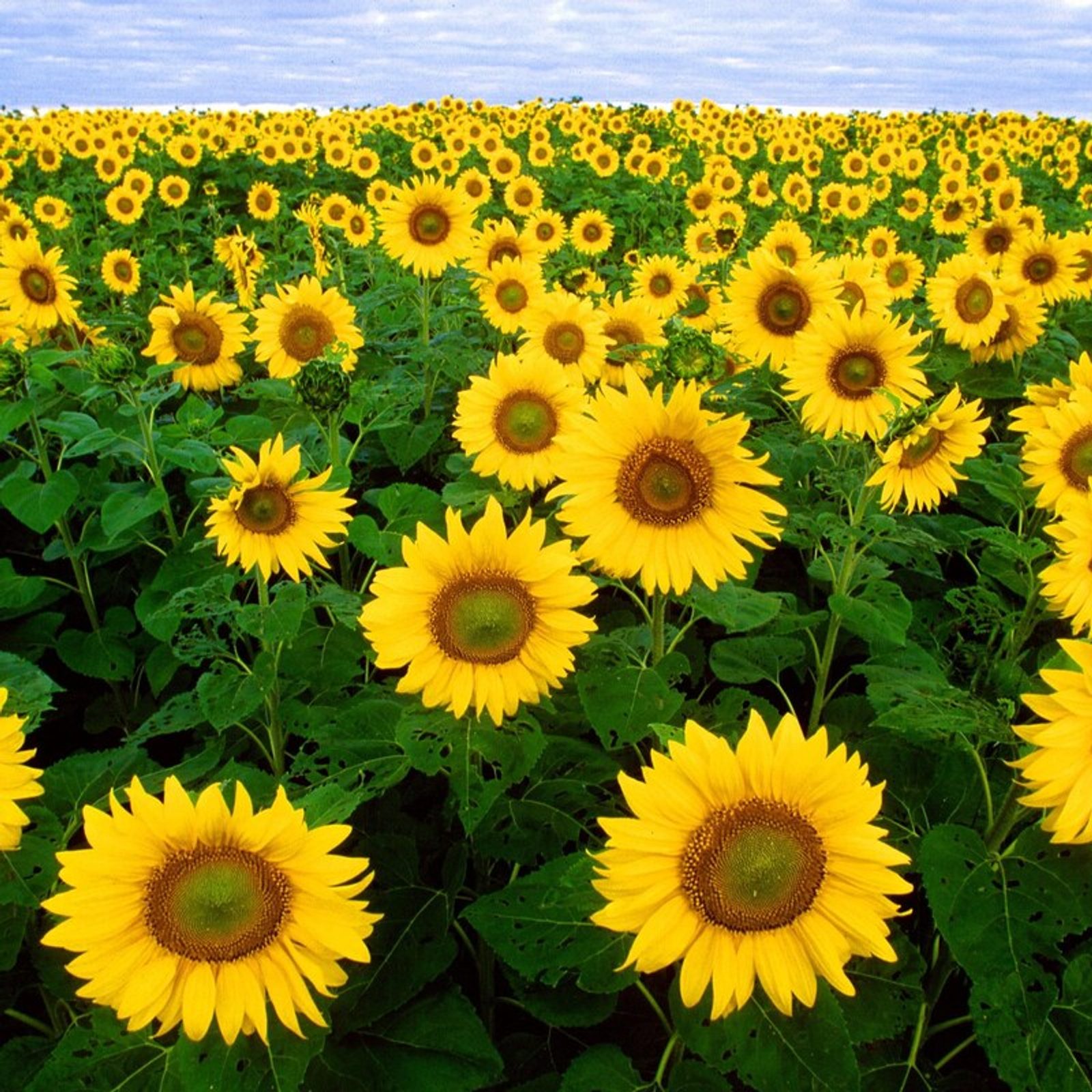
Not thought as we know it, but neither do plants reaching for the sun. Michael Marder’s Plant-Thinking rehabilitates vegetal intentionality: the heliotrope doesn’t deliberate, yet it orients, anticipates, and responds. [marder] If intention admits of degrees and modes, cosmic-scale analogs become easier to imagine.
Teilhard de Chardin saw this decades earlier: evolution is not random drift but a vector toward complexity and consciousness, what he called the Omega Point. [teilhard] Contemporary cosmology doesn’t require his theology, but it echoes his observation: the universe’s initial conditions and physical constants appear finely tuned for the emergence of structure, life, and mind.
From this view, the universe need not be said to “have” intention in the human sense. But it may be the kind of system whose dynamics don’t merely permit intention, they favor it. This invites the hypothesis that what we call intention reflects something deeper in the structure of reality itself. [TEST EDIT 1]
[TEST EDIT 2]
[TEST EDIT 3] [TEST EDIT 4] [TEST EDIT 5] [TEST EDIT 5]
[TEST EDIT 4] [TEST EDIT 5] [TEST EDIT 5]