9.9 Mandelbrot Structure in Physical Crystals
quasicrystals, magnetic domain walls, and charge density waves all produce Mandelbrot-like fractal structure, not by computing a formula but by obeying local iterative rules, because that structure is what local iteration produces at its boundaries regardless of substrate.
Proto
Mandelbrot-like fractal structure has been found in physical systems, not as visual coincidence but as a consequence of the same iterative mathematics running in physical substrates.
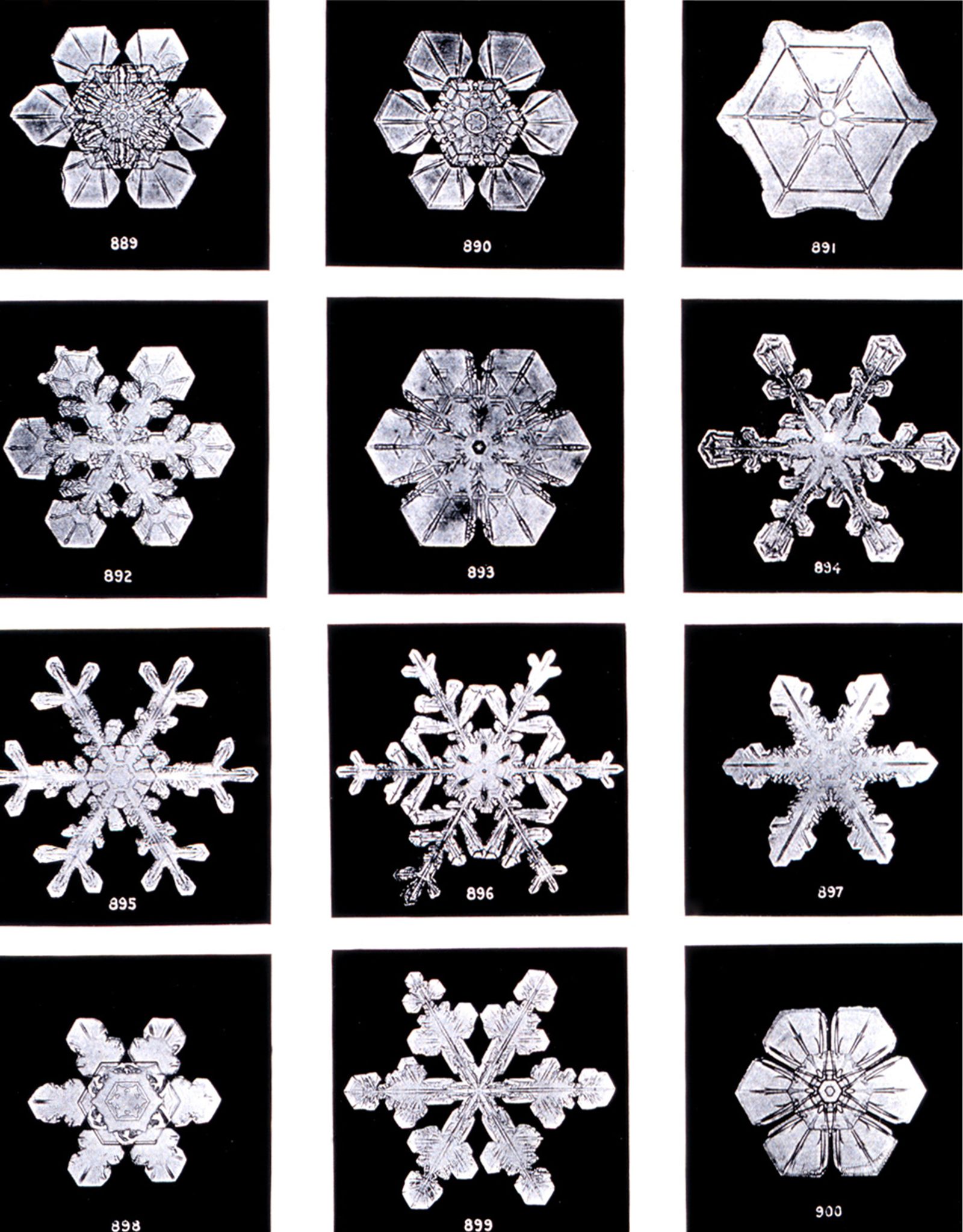
Quasicrystals and Penrose tilings[shechtman][penrose-4][penrose-3] show self-similar structure governed by the golden ratio, which sits at a specific location in the Farey sequence and Stern-Brocot tree, the same location that determines key features of the Mandelbrot boundary geometry.
Magnetic domain boundaries in certain ferromagnetic materials form fractal walls that closely mirror Mandelbrot geometry. The physics is iterated nearest-neighbor interactions, each atom responding to its neighbors by a local rule, and the global boundary structure emerging from that iteration without being planned.
Charge density waves in certain conducting crystals produce quasi-fractal interference patterns through similar mechanisms.
The philosophical point: the crystal is not computing the Mandelbrot set. It does not know it is drawing a fractal. It is simply obeying local rules. And the Mandelbrot structure emerges anyway, because Mandelbrot structure is what local iterative rules produce at their boundaries, regardless of the physical substrate. The mathematics is substrate-independent.