10.3 How Learning Becomes Hardwired: The Baldwin Effect
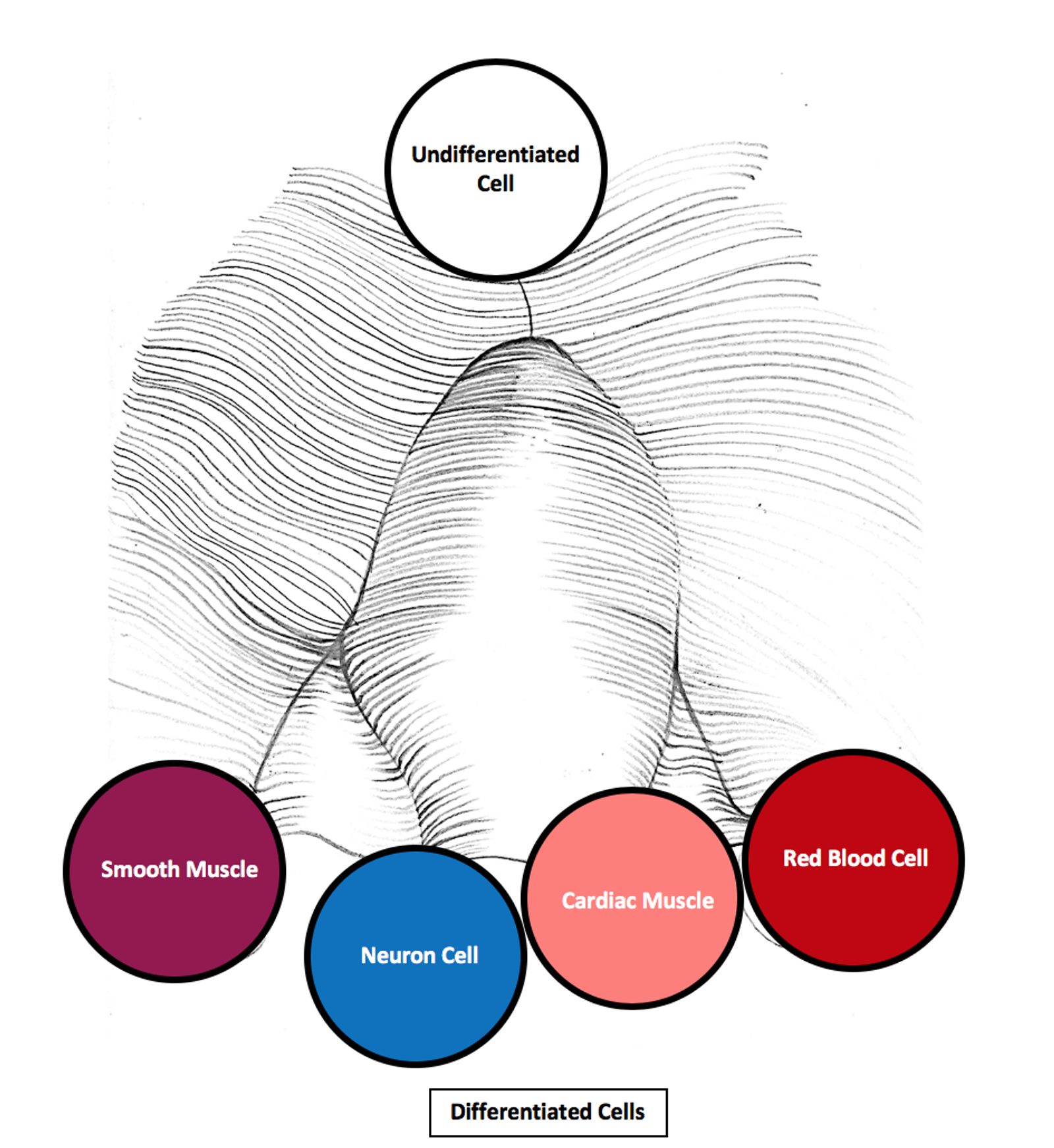
If individuals genetically predisposed to learn a solution faster survive and reproduce better, selection will progressively shift the starting point toward the learned solution until the learning itself is unnecessary, the Baldwin effect, by which experience becomes innate without Lamarckian inheritance.
Proto
If evolution and neural network training find the same solutions, a natural question arises: how does a solution that one generation learns during its lifetime become genetically specified in subsequent generations? The Baldwin effect, proposed in 1896[baldwin], provides a mechanism that requires no Lamarckian inheritance[simpson]. If individuals who are genetically predisposed to learn a solution faster, or to start closer to it, survive and reproduce better, then selection will progressively shift the genetic starting point toward the learned solution, until eventually the learning itself is unnecessary and the trait appears innate. The learned behavior is absorbed into the genome not by any direct encoding of experience but by selection pressure gradually narrowing the space of possible developmental outcomes around the useful solution. Evolution, development, learning, and moment-to-moment thought may all be the same fundamental algorithm, variation and selection, running on different substrates at different timescales, each level feeding into the ones above and below it.
Images