9.4 The Choice Dimension as Tree Algebra
The choice dimension doesn’t need to multiply, it only needs to branch, and a tree algebra fibered over spacetime, with branching numbers fixed by local Farey structure and probabilities given by harmonic measure, may be the right mathematical object for what Many Worlds is actually describing.
Proto
The proposal to add “choice” as a fifth dimension, alongside space, time, runs into a mathematical obstacle. The Mandelbrot set depends on the algebraic structure of complex multiplication. To generalize to five dimensions you need a five-dimensional number system with coherent multiplication. Such systems are severely constrained, quaternions work, octonions work, but five dimensions has no clean analog.
Unless the choice dimension doesn’t need to multiply. It only needs to branch.
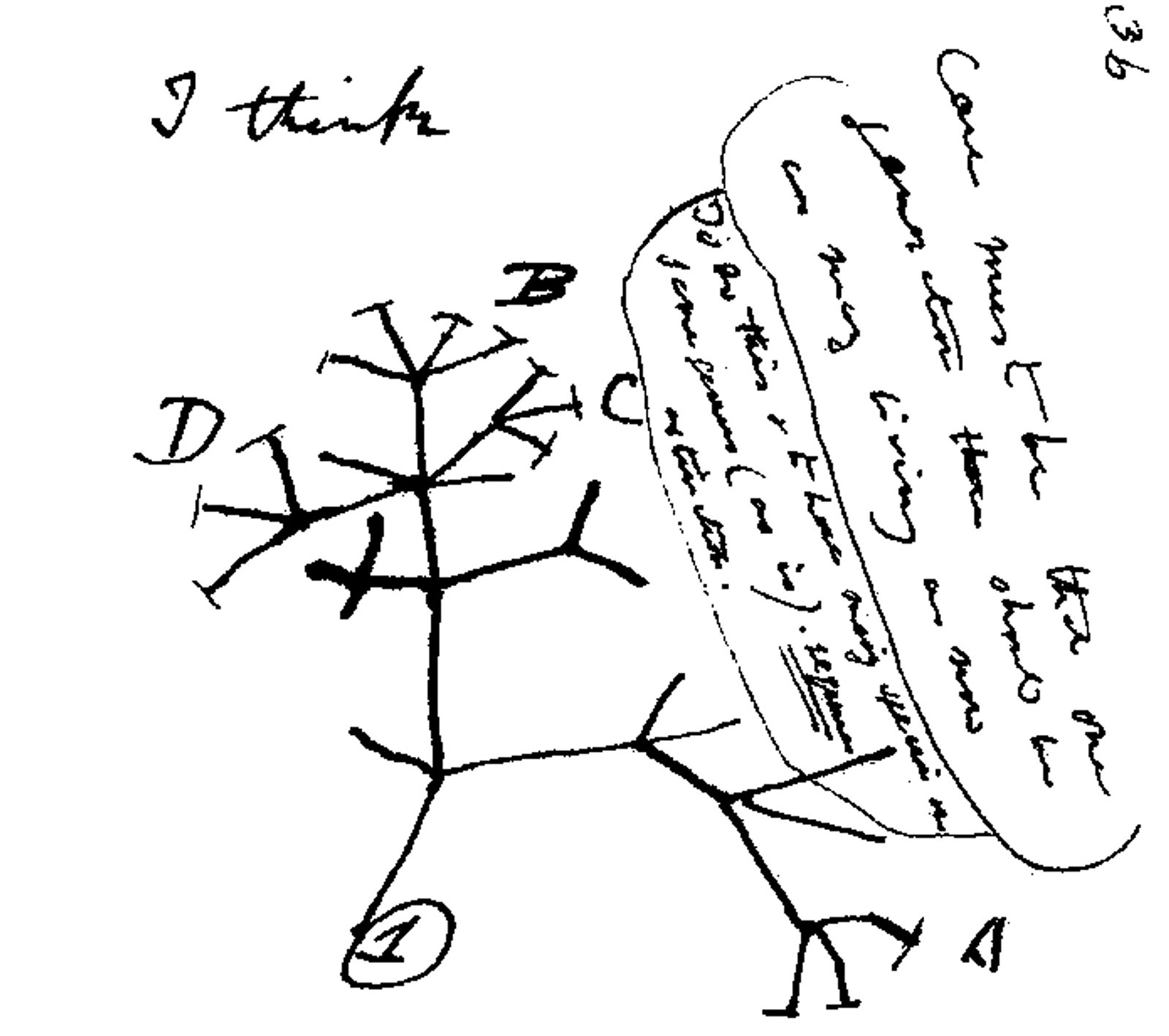
Branching is a different kind of algebra, a tree algebra rather than a field algebra. Trees don’t have multiplication in the usual sense. They have a different operation: grafting. You attach one tree to a node of another.
If the choice dimension is a tree-algebra fibered over the four dimensions of spacetime, meaning at every point in spacetime there hangs a finite branching tree of possible next steps, with branching numbers determined by local Farey structure and probabilities given by harmonic measure, then you have a coherent mathematical object. Not a five-dimensional number system, but a four-dimensional spacetime with a tree-valued fifth coordinate.
This may be the right mathematical structure for what the Many Worlds interpretation[everett] is actually describing.
Images